
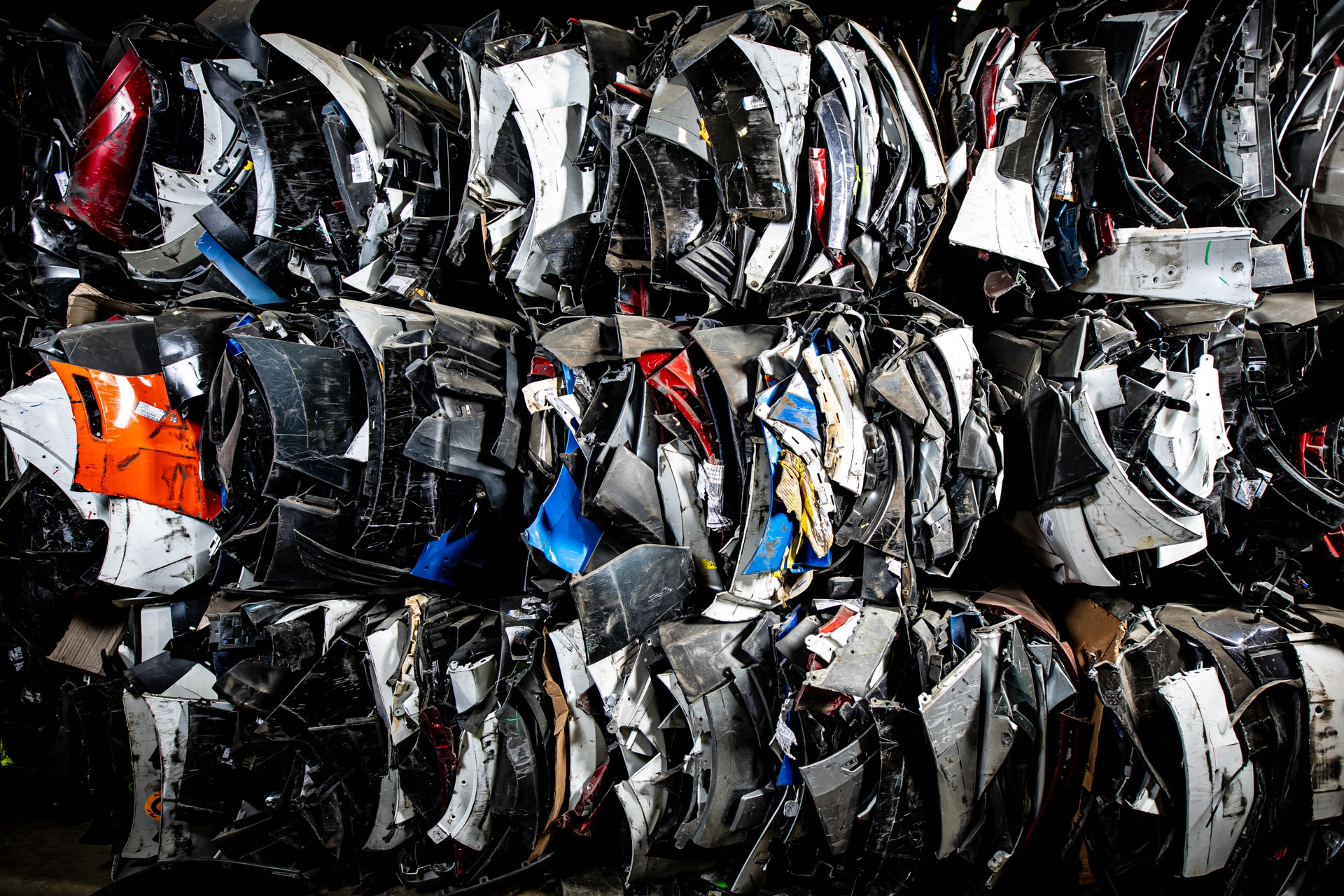
The Circularity Gap
The Circularity Gap
Every major automotive manufacturer now has a circularity strategy, but targets don’t always mean better outcomes.
Recycled content commitments are increasing again. Sustainability reporting is becoming more sophisticated. Governments are introducing new regulations. Purchasing teams are being asked to source more recycled material while engineering teams are expected to maintain the same performance, quality, appearance, and cost that customers have always expected. Those are all positive developments. They also expose one of the biggest challenges facing the automotive plastics industry.
What happens if recycled content increases while manufacturing performance gets worse?
That question isn’t asked often enough because recycled content is increasingly easy to measure, but manufacturing performance isn’t. Yet production is ultimately where circularity either succeeds or fails. A recycled-content calculation can be completed once. Manufacturing performance has to be repeated across plants, tools, shifts and millions of parts.
The industry has become very good at measuring circularity.
Across automotive, sustainability metrics have become increasingly sophisticated. OEMs publish ambitious recycled content targets. Suppliers report carbon reductions. Procurement asks for recycled content sources and percentages alongside pricing and technical data. Investors, regulators, and consumers all want greater transparency into how products are made.
This is healthy momentum, but there’s risk the industry measures itself out of progress.
The conversation is changing for good reason.
Europe’s new End-of-Life Vehicle regulation matters not because Europe is a separate market, but because modern automotive supply chains are not regional. The rules will phase in recycled-plastic requirements of 15% within six years and 25% within ten years, with a portion required to come from end-of-life vehicles or recovered vehicle parts. Vehicle platforms, material approvals, engineering standards and supplier relationships already cross borders. Companies that learn to recover, verify and manufacture consistently with circular materials will not simply be complying with European regulation. They will be positioning themselves for the next generation of global vehicle programs.
But we think the industry is still asking the wrong question.
We believe the most important question is: How well does that material perform once production begins?
Injection molding machines don’t know whether a pellet originated from virgin resin, industrial scrap, or an end-of-life bumper. They respond to something else entirely. Moisture. Melt flow. Thermal history. Contamination. Particle size. Lot-to-lot variation. Process windows.
The production floor doesn’t reward good intentions. It rewards consistency. In other words, circularity has to become an operating capability.
The market is sending signals that are easy to misinterpret.
Over the past year, resin markets have reminded us how interconnected the industry has become. On the surface these appear to be separate stories. They’re not. They’re all expressions of one increasingly interconnected materials system.
Polypropylene economics continue to move with polymer grade propylene (PGP) and broader energy markets. Polycarbonate pricing increasingly reflects global capacity additions and Asian trade flows. Geopolitical disruptions influence feedstock availability, freight, and production economics in ways that ripple across multiple resin families.
Meanwhile, recycled resin economics don’t always move in the same direction as virgin materials. When virgin prices fall, many organizations understandably question the economics of recycled content. That reaction is logical, but incomplete. Short-term resin indexes influence purchasing behavior. Long-term manufacturing capability determines whether circular materials remain viable through the cycle. A circular strategy that works only when virgin resin is expensive is not yet a durable strategy.
Some of the most interesting work in the industry isn’t focused on recycled content.
It’s focused on preserving material value. We’ve had the privilege of participating in conversations that extend well beyond resin formulation. Discussions around material identity, end-of-life recovery, closed-loop bumper recycling, traceability, and designing supply chains capable of returning yesterday’s vehicle into tomorrow’s production line. That represents a meaningful shift.

The question is no longer simply:
Can this material be recycled?
Increasingly, it is becoming:
Can this material become the same product again, and perform the same way?
That is a much more difficult problem. It is also a much more valuable one to solve.
The Circularity Gap
At MRC, we’ve come to believe there is a widening gap between measuring circularity and achieving it. If we’re going to succeed as an industry, we’re going to have to work together on refinement, validation, and process understanding. That means collaboration between engineering, procurement, manufacturing, and sustainability teams.
Most importantly, it will require recognizing that variability, not recycled content itself, is often the real obstacle.
Variability is the hidden tax on circularity.
The organizations that learn to reduce it will unlock far more than recycled content targets. They’ll build manufacturing systems capable of competing in a world where circularity is no longer optional.